Business Intelligence and Analytics Program - Architecture Documentation
1. Project Overview
The Business Intelligence and Analytics Program established a comprehensive data-driven decision-making ecosystem that transformed business operations across the different operations teams and regions for the business unit. The program introduced self-service analytics capabilities, and advanced predictive modeling, enabling data democratization and fostering a culture of data-driven decision making.
2. Business Challenge
Prior to the implementation of the BI and Analytics Program, the organization faced significant challenges in leveraging its data assets:
- Data Silos: Critical business information was isolated in disparate systems with limited integration
- Manual Reporting: Labor-intensive processes for gathering, consolidating, and analyzing business data
- Limited Visibility: Lack of timely access to performance metrics and operational insights
- Inconsistent Definitions: Varying interpretations of key business metrics across departments
- Reactive Decision Making: Inability to proactively identify trends and opportunities
- Analytics Skills Gap: Limited in-house expertise for data analysis and advanced analytics
- Data Quality Issues: Inconsistent data quality standards across source systems
3. Architecture Solution
3.1 System Architecture
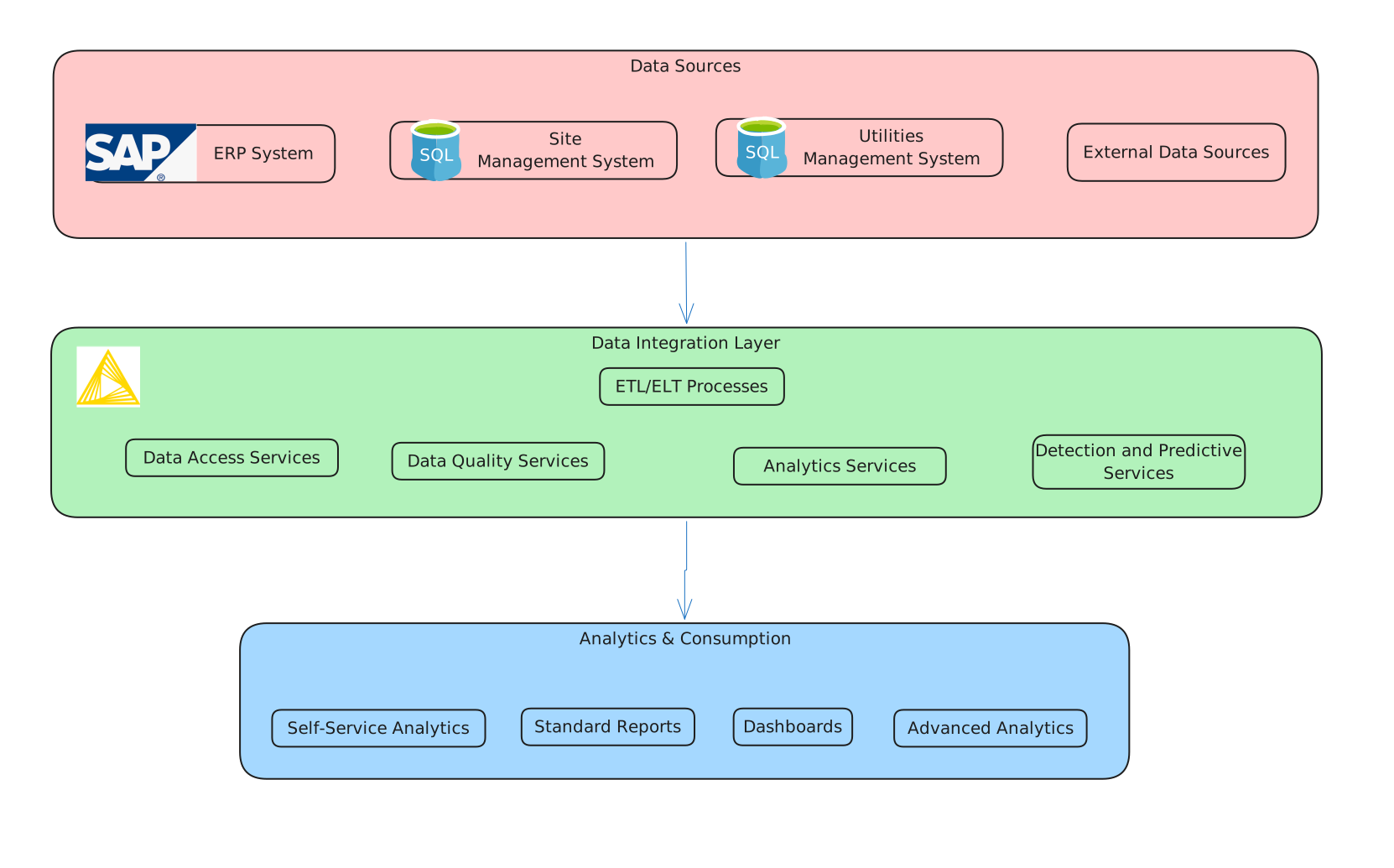
High Level Architecture
3.2 Data Integration Framework
The data integration framework was designed to streamline the flow of information from source systems to analytics platforms:
3.3 Technology Stack
4. Key Components
4.1 Data Warehouse
The enterprise data warehouse serves as the central repository for all business data, providing a single source of truth for analytics and reporting:
- Centralized Repository: Consolidated storage for all business data from disparate source systems
- Dimensional Modeling: Star schema design optimized for analytical queries and reporting
- Historical Data: Preservation of historical data with time-based snapshots for trend analysis
- Data Governance: Enforced data quality standards and business rules
- Scalable Architecture: Designed to handle growing data volumes with consistent performance
- Metadata Management: Comprehensive documentation of data lineage, definitions, and transformations
Data Warehouse Schema
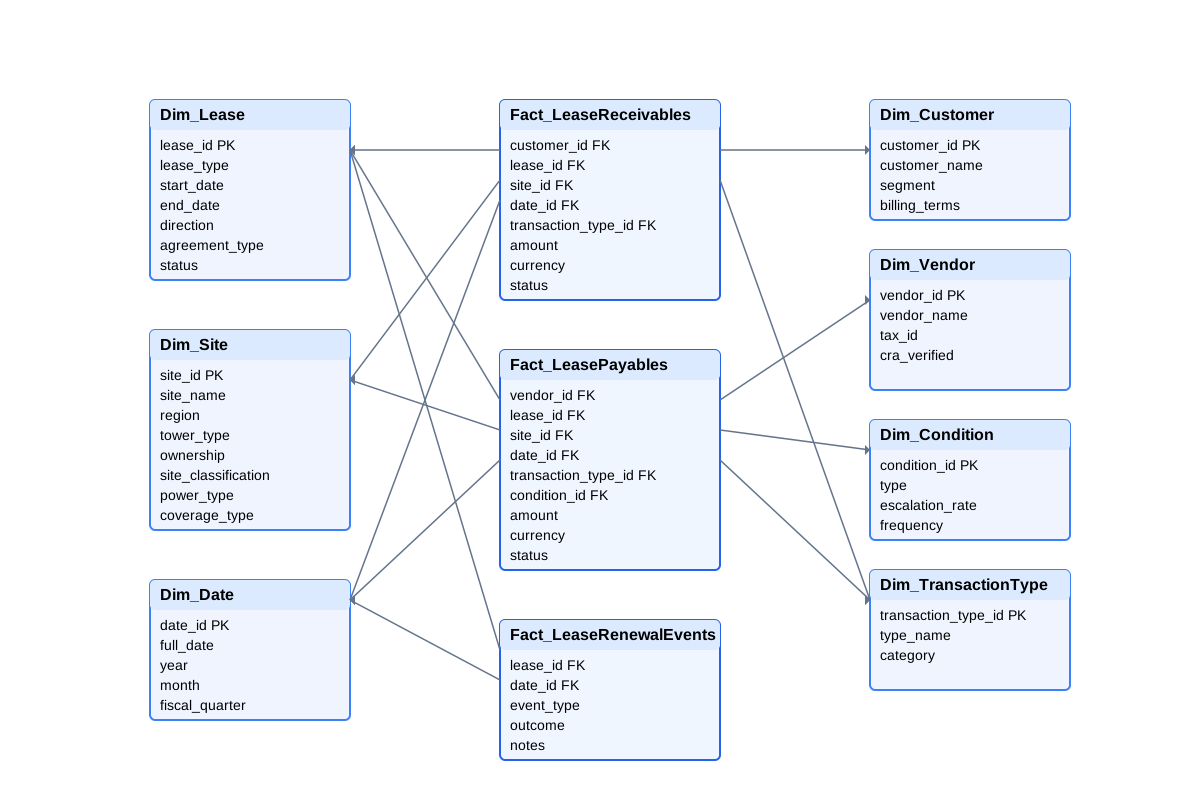
The data warehouse follows a star schema design with fact tables at the center connected to dimension tables:
Click on the diagram to view full size in a new tab
Schema Components
The schema design follows dimensional modeling best practices with:
- Fact Tables: Contain measurable events and business processes (LeaseCashflows, BuildProjects)
- Dimension Tables: Provide context to the facts with descriptive attributes
- Foreign Keys: Connect fact tables to their relevant dimensions
- Slowly Changing Dimensions: Track historical changes to dimensional attributes over time
Data Warehouse Analytics
The data warehouse powers a comprehensive suite of analytics that drive business decision-making across multiple domains:
💰 1. Financial Analytics (Payables & Receivables)
📊 Lease Cashflow & Forecasting
- Total lease expenditures vs. revenues by month/quarter
- Forecast future cashflows based on contract conditions (escalations, caps)
- Net profitability per site (Receivables – Payables)
- Currency exposure across leases
📊 Payment Performance
- Late payments by vendor or site
- Overdue customer payments (Receivables aging report)
- Payment accuracy vs. contract (are vendors overcharging?)
🧾 2. Lease Lifecycle & Contract Analytics
📊 Renewal Pipeline
- Leases expiring in the next 3/6/12 months
- Auto-renewals vs. manually renewed contracts
- Avg. renewal success rate by site type or vendor
📊 Lifecycle Compliance
- Leases missing key dates (e.g., start, termination, signature)
- Contract activity over time (new, renewed, terminated leases)
🏗️ 3. Site & Infrastructure Analytics
📊 Site Utilization
- Average revenue per site or per tower type
- Number of tenants per site
- Underutilized assets (e.g., low revenue but high rental cost)
📊 Site Classification Analysis
- Lease cost/revenue breakdown by site type (Macro, Rooftop, Small Cell)
- Cost per region, ownership model (leased vs. owned), or power source
👥 4. Vendor & Customer Analytics
📊 Vendor Exposure
- Top vendors by spend, region, or lease count
- CRA-verified vs. unverified vendor compliance exposure
📊 Customer Profitability
- Revenue by customer and site type
- Customer churn/renewal behavior
📅 5. Time Series & Trend Analysis
- Monthly/Quarterly lease payment trends
- Seasonal renewal or termination patterns
- Year-over-year revenue/cost comparison by asset class
🧠 Advanced Use Cases (AI/ML & Decision Support)
- Classify risky contracts (e.g., frequent amendments, vague terms)
- Anomaly detection: catch sudden drops/spikes in cashflow
4.2 Data Integration
Knime's data integration capabilities provided the foundation for analytics workflows:
- Database Connectivity: Direct integration with different data sources for data extraction and loading
- Data Manipulation: Powerful no-code and low-code nodes for filtering, joining, and aggregating data
- Workflow Scheduling: Automated data refresh and processing schedules
- Data Quality: Built-in nodes for data cleaning, validation, and standardization
- File Handling: Support for multiple file formats including CSV, Excel, and JSON
- Memory Management: Efficient handling of large datasets through data partitioning
4.3 Self-Service Analytics
Knime served as the primary analytics platform, providing comprehensive self-service capabilities:
- Workflow-Based Interface: Visual programming environment for creating and modifying analytics workflows
- Repeatable Analytics: Reusable components and workflows for repeatable consistent analysis
- Data Processing: Robust data manipulation and transformation capabilities
- Report Generation: Automated report creation and distribution workflows
- Reusable Components: Library of standardized nodes and workflows for common analytics tasks
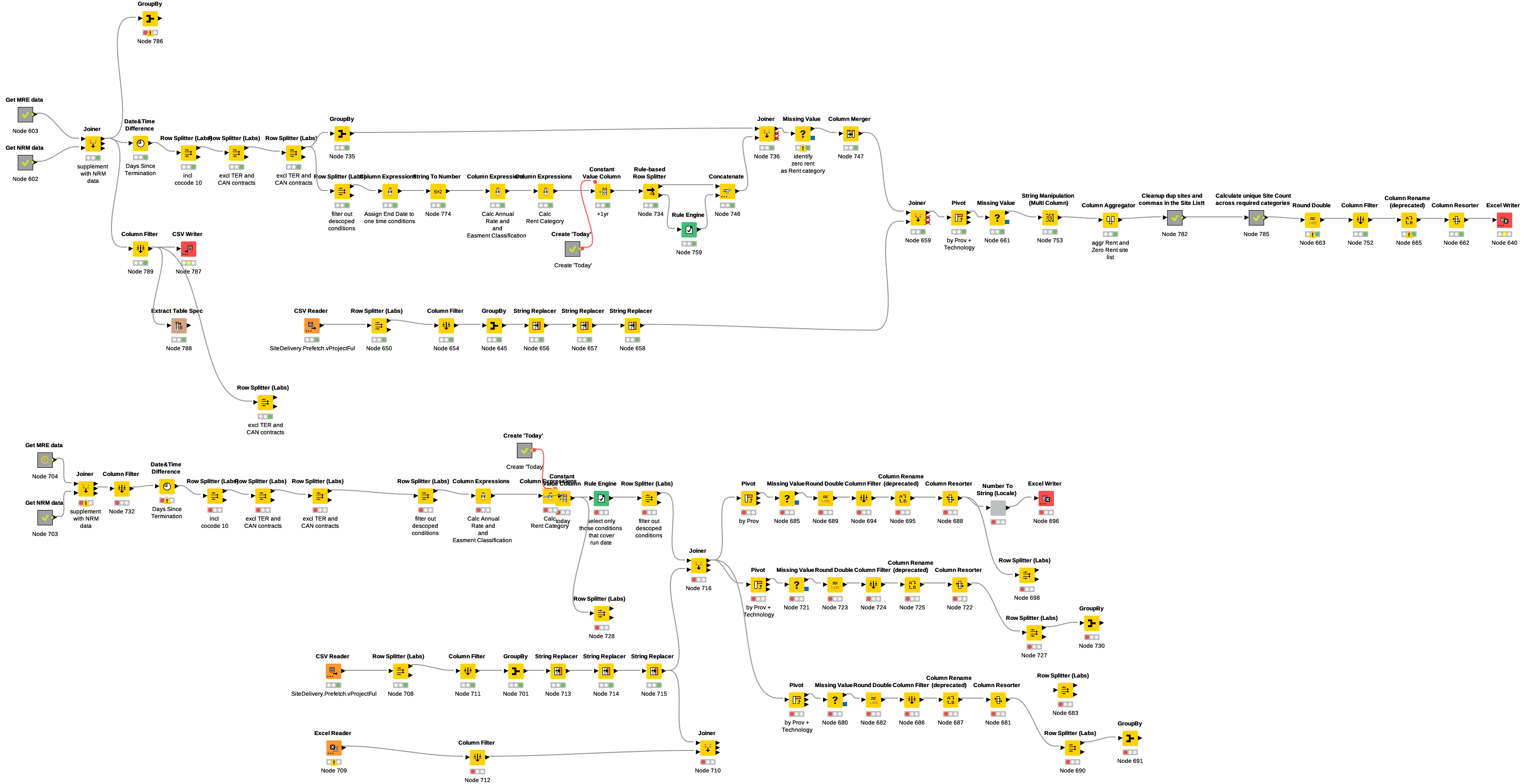
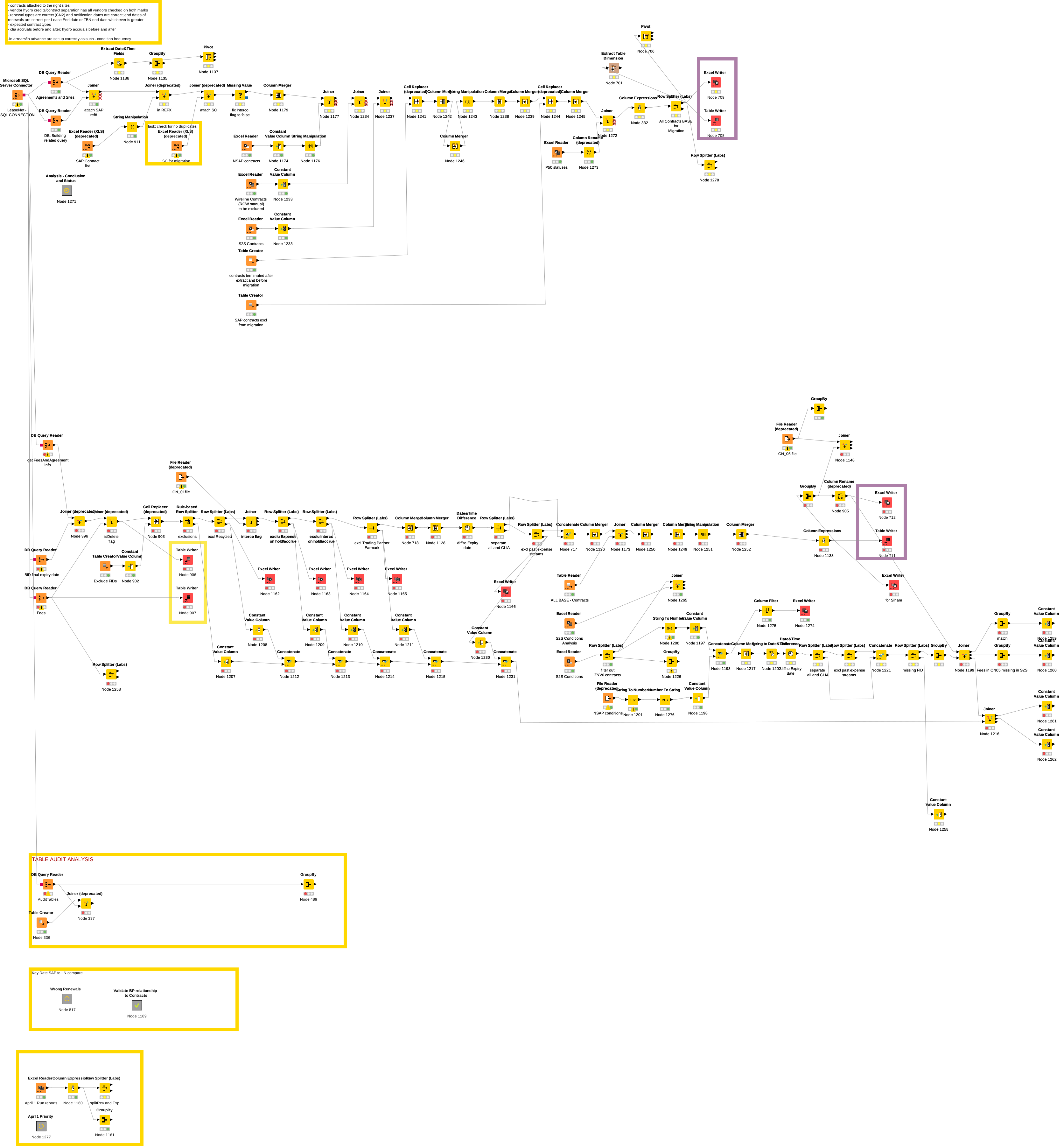
Example Workflows
Click on any workflow to view it in detail
Basic Data Processing Workflow
Advanced Analytics Workflow
4.4 Predictive Analytics
The predictive analytics capabilities enabled forward-looking decision making:
- Demand Forecasting: Multi-variable models for predicting rent pricing
- Landlord Segmentation: Analysis and behavioral clustering for targeted negotiation
- Anomaly Detection: Real-time monitoring for unusual patterns in operational data
5. Implementation Approach
The program was implemented using an agile, phased approach to deliver continuous business value:
- Assessment & Strategy: Comprehensive evaluation of current state and future requirements
- Foundation Building: Establishment of core infrastructure and data governance framework
- Subject Area Implementation: Iterative delivery of data marts by business domain
- Self-Service Enablement: Rollout of tools and training for business users
- Advanced Analytics: Progressive implementation of predictive and prescriptive capabilities
- Continuous Improvement: Ongoing enhancement based on business feedback and emerging needs
6. Business Impact
Key Achievements
- Empowered individual business users to create and maintain their own analytics workflows without IT dependency
- Enabled regional teams to customize and adapt analytics processes to their specific needs
- Eliminated reporting bottlenecks by allowing users to directly access and analyze data
- Reduced dependency on centralized reporting team through self-service analytics capabilities
- Standardized data access and analysis methods across different business units
- Improved data literacy across the organization through hands-on use of analytics tools
The implementation of Knime as a self-service analytics platform transformed the organization's approach to data analysis, shifting from centralized reporting to a democratized model where individual users could access, analyze, and report on data independently. This significantly improved operational efficiency and decision-making agility across all business units.
Last Updated: