Financial Services Application - Architecture Documentation
1. Executive Summary
This document outlines the architecture for our trading and disbursement platform designed to manage client investments from onboarding through trading and disbursement. The architecture follows a multi-tiered approach with clear separation of concerns to ensure scalability, security, and maintainability.
2. System Overview
The platform follows a modern microservices architecture with the following key components:
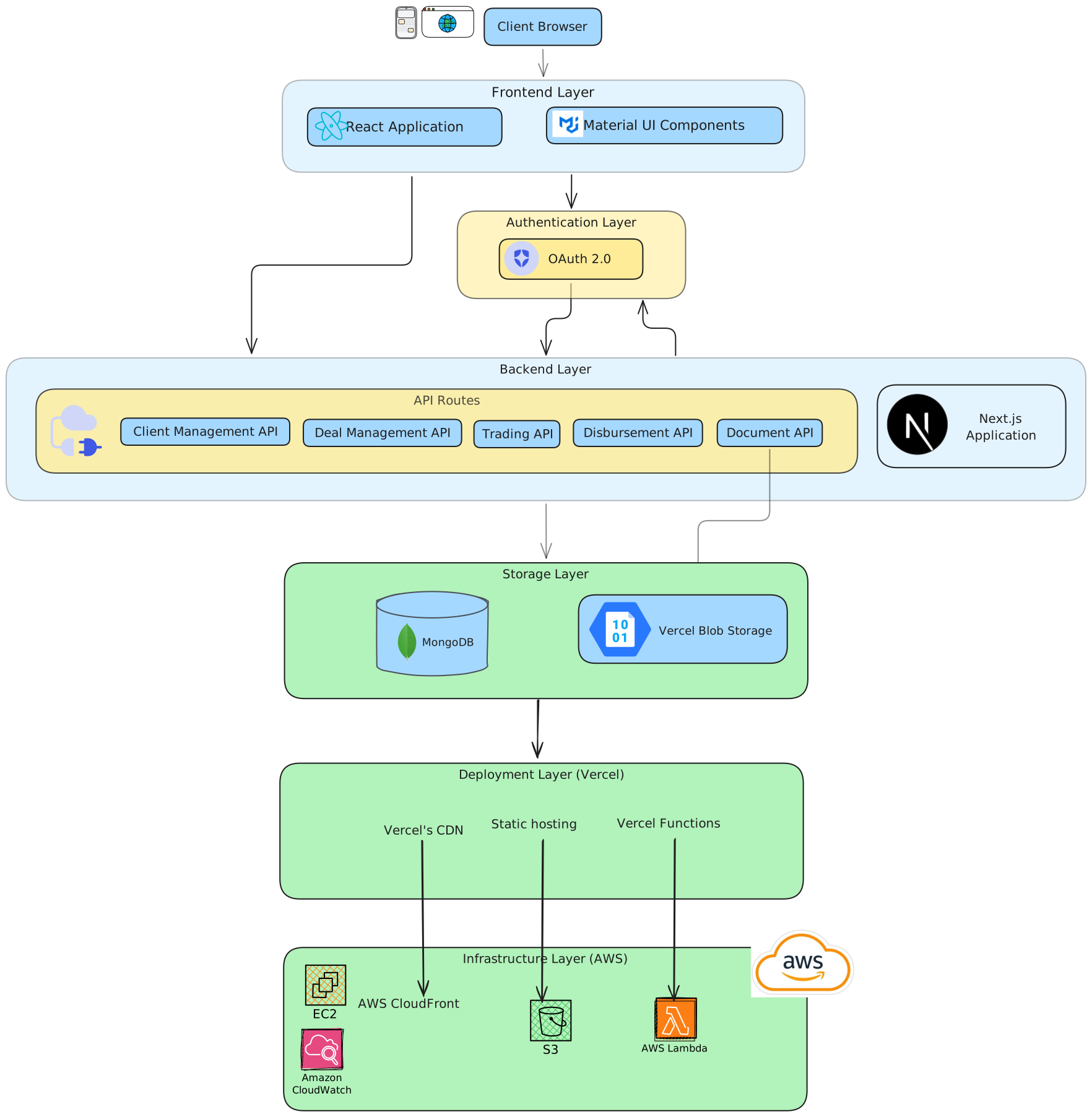
- React-based frontend applications
- Material UI for consistent design
- Next.js for server-side rendering and API routes
- REST API Gateway for secure service communication
- MongoDB for data storage
- Blob storage for document management
- Separation of data and document storage
- OAuth 2.0 for authentication and authorization
3. Architecture Components
3.1 Architecture Diagram
High-Level System Architecture
The overall architecture showing key components and their relationships in the financial services application.
3.2 Component Descriptions
3.2.1 Database Layer
Technology Stack: MongoDB
Key Collections:
contacts- Contact profile informationdeals- Investment program detailscapitals- Investment capital detailstrades- Trading transaction recordsdisbursements- Disbursement transaction records
3.2.2 Business Logic Layer
Technology Stack: Next.js
Key Services:
- Client Management Service (
/pages/api/steps/*): Manages client onboarding workflow and data - Deal Management Engine (
/pages/api/deals/*): Core transactional engine for investment deals - Trading Engine (part of
/pages/api/deals/*): Implements trading workflow and execution - Disbursement Processor (
/pages/api/disbursement/*): Manages fund distribution - Document Management Service (
/pages/api/documents/*): Handles document storage via Vercel Blob Storage
Implementation Patterns:
The application follows several key implementation patterns:
- API Route Pattern: Business logic is implemented in Next.js API routes, organized by domain
- Server-side Database Access: MongoDB integration through Next.js server components with connection pooling
- Configuration-Driven Workflow: Steps and forms are dynamically rendered based on configuration
- Document-Based Data Model: Flexible schema using MongoDB's document model
- Role-Based Authorization: Permissions system for securing access to functionality
3.2.3 Data Flow Patterns
Client Request → API Route → Business Logic → Database → Response
Document Upload → API Route → Storage Service → Blob Storage → Metadata in Database → Response
Workflow Progression → API Route → State Validation → State Update → Event Recording → Response
Authentication Flow → Client → OAuth 2.0 → Token Validation → Protected Resource Access → Response
3.2.4 API Layer
Technology Stack: REST API with OpenAPI specification
Authentication: OAuth 2.0 with JWT tokens
Key Endpoints:
/api/clients- Client management/api/assessment- Risk assessment/api/trades- Trading operations/api/disbursements- Disbursement management
3.2.5 User Interface
Technology Stack: React with Material UI
Key Features:
- Responsive design for multiple devices
- Dashboard for client portfolio overview
- Trading interface with real-time updates
- Reporting and analytics visualization
4. Data Flow
4.1 Client Onboarding Process
Client Onboarding Workflow
The process flow for new client registration and account setup, showing interactions between system components.
4.2 Trading Process
Trading Process Flow
The sequence of operations for processing trade requests, from client submission through execution and settlement.
5. Security Architecture
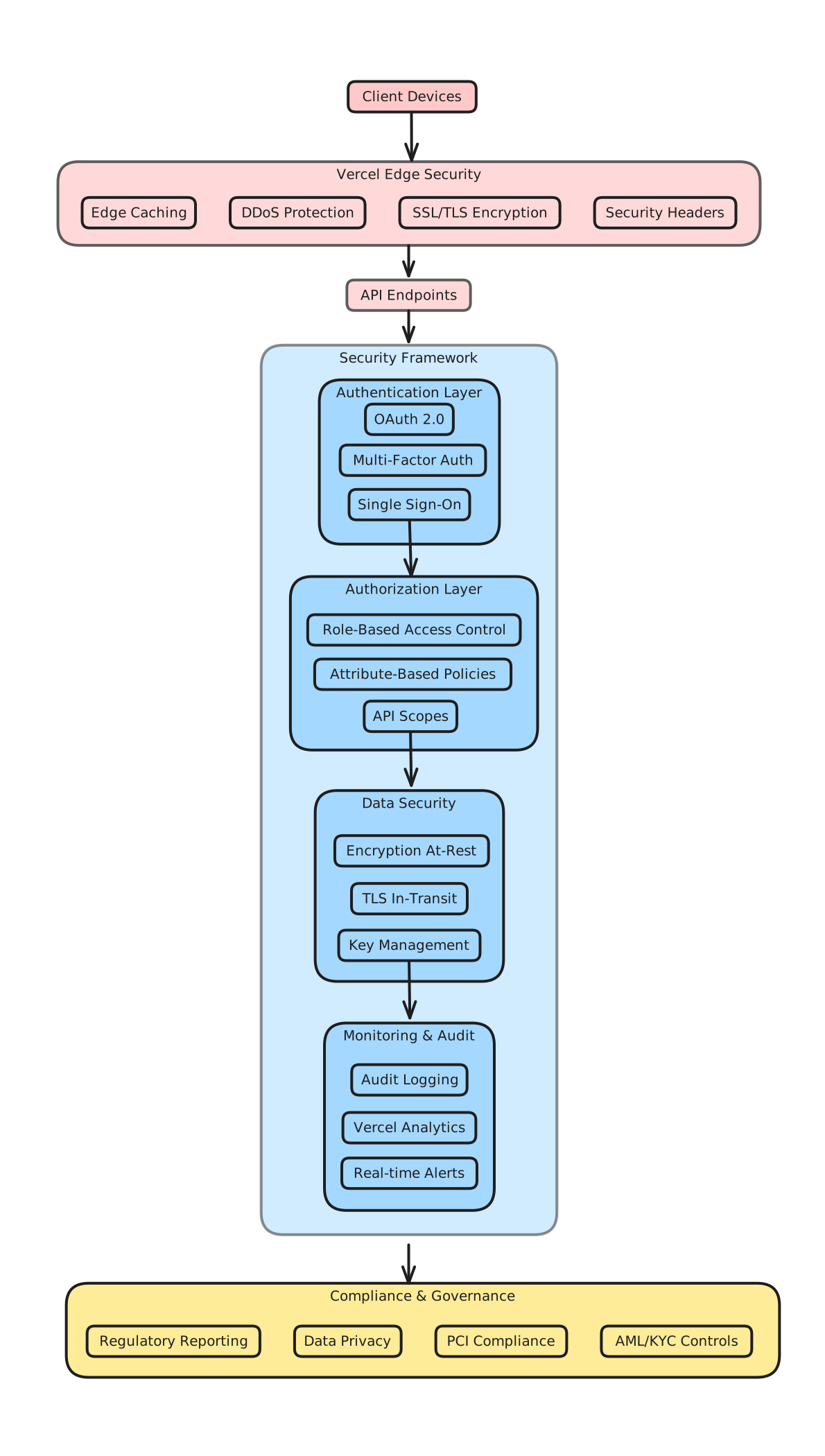
5.1 Security Layers
Security Framework Architecture
The multi-layered security approach implemented throughout the system to protect data and operations.
5.2 Authentication Flow
OAuth 2.0 Authentication Process
The secure authentication flow using OAuth 2.0 with JWT tokens for API access.
6. Deployment Architecture
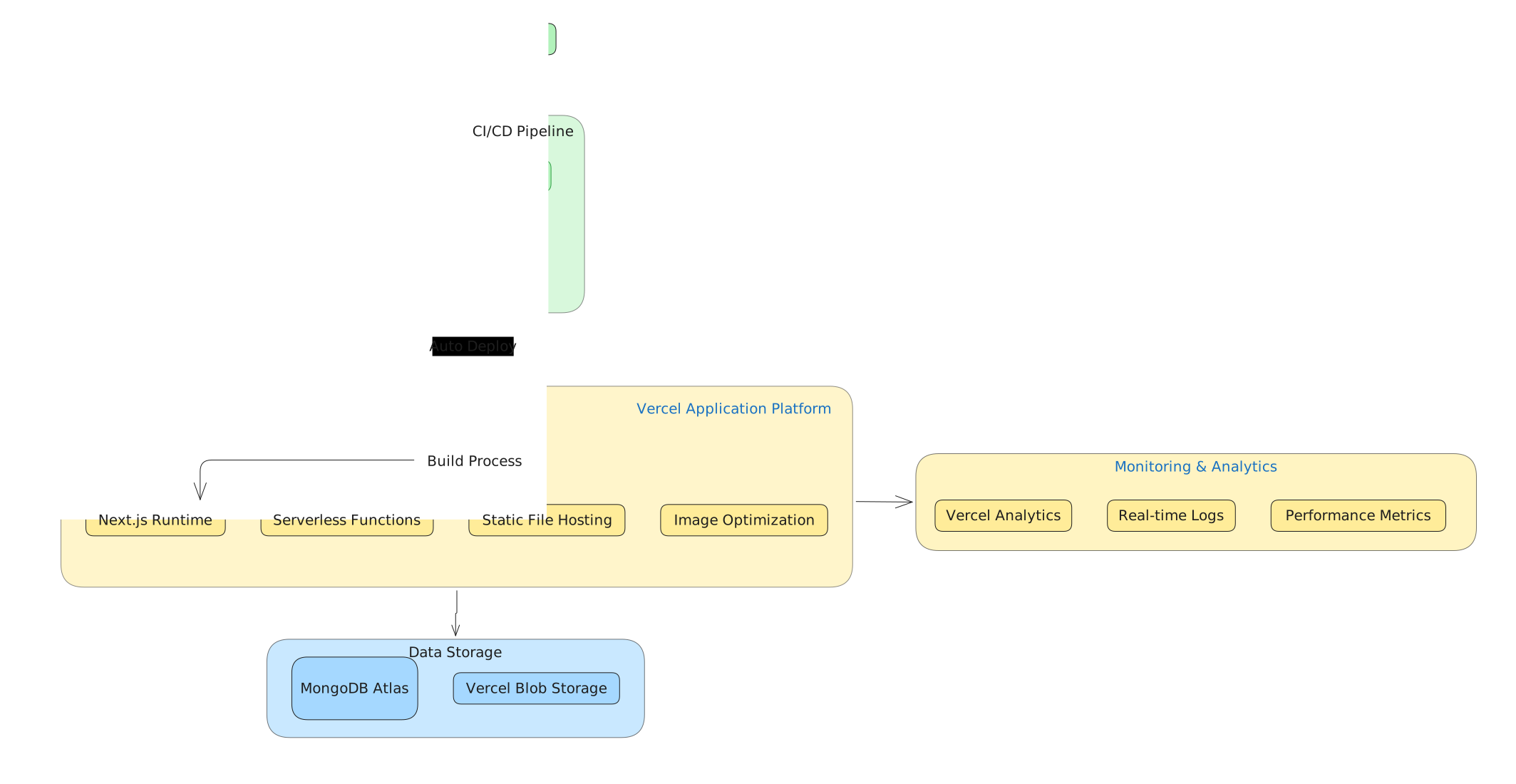
6.1 Infrastructure Diagram
Cloud Infrastructure Architecture
The cloud infrastructure architecture showing how the application is deployed and managed on Vercel.
6.2 Deployment Platform
The trading platform is deployed on Vercel, which serves as our primary deployment layer. Vercel leverages AWS infrastructure to provide:
- Global Edge Network: Automatic deployments to AWS edge locations for low-latency access worldwide
- Serverless Functions: Automatic scaling of backend API functionality using AWS Lambda
- Blob Storage: Secure document storage using Vercel Blob Storage, which is built on top of AWS S3
- Preview Environments: Isolated environments for testing feature branches before production deployment
- Performance Analytics: Real-time monitoring and performance metrics collection
Our team has been working extensively with Vercel to optimize the deployment pipeline, implement CI/CD workflows, and leverage its AWS-powered infrastructure for high availability and reliability. This has significantly improved our deployment velocity and application performance.
7. Technology Stack
Technology Stack
7.1 Core Business Services
The application implements several key business services through the Next.js API routes architecture:
Business Logic Services Architecture
Core services and their relationships within the application architecture.
Client Management Service
Implementation: /pages/api/steps/* and related endpoints
- Manages the client onboarding workflow
- Handles client data collection, validation, and persistence
- Implements step-based journey from introduction to verification
- Provides configuration-driven forms and workflows
Key Functions:
- Client registration and onboarding
- Client assessment including risk profiling
- Client verification and objective assessment
- Configuration-driven workflow management
Deal Management Engine
Implementation: /pages/api/deals/*
- Core transactional engine for investment deals
- Implements deal lifecycle from creation through approval
- Manages state transitions and validation rules
- Provides structured data model with step-based progression
Key Functions:
- Deal creation with unique ID generation
- Step management through the deal lifecycle
- Status tracking and history recording
- Deal approval workflow
Trading Engine
Implementation: Part of the deal workflow within /pages/api/deals/*
- Implements the trading workflow for investment deals
- Manages trading verification, execution, and documentation
- Tracks trading strategy and performance
Key Functions:
- Trading verification and prerequisite checks
- Trading program definition and documentation
- Trading execution and tracking
- Trading performance monitoring
Disbursement Processor
Implementation: Components in /components/disbursement/* with API endpoints in /pages/api/disbursement/
- Manages the distribution of funds to various parties
- Implements disbursement calculations, verifications, and approvals
- Handles transaction recording and documentation
Key Functions:
- Disbursement calculation based on participation agreements
- Transaction recording and documentation
- Approval workflow for disbursements
- Verification and compliance checks
Document Management Service
Implementation: /pages/api/documents/* and /pages/api/utils/storageService.ts
- Handles document uploads, storage, retrieval, and deletion
- Manages document metadata and categorization
- Integrates with Vercel Blob Storage for document persistence
Key Functions:
- Secure document upload with size validation
- Document retrieval with appropriate content-type handling
- Document deletion and lifecycle management
- Path-based document organization
7.2 Data Flow Architecture
Client Request → API Route → Business Logic → Database → Response
Document Upload → API Route → Storage Service → Blob Storage → Metadata in Database → Response
Workflow Progression → API Route → State Validation → State Update → Event Recording → Response
Last Updated: